

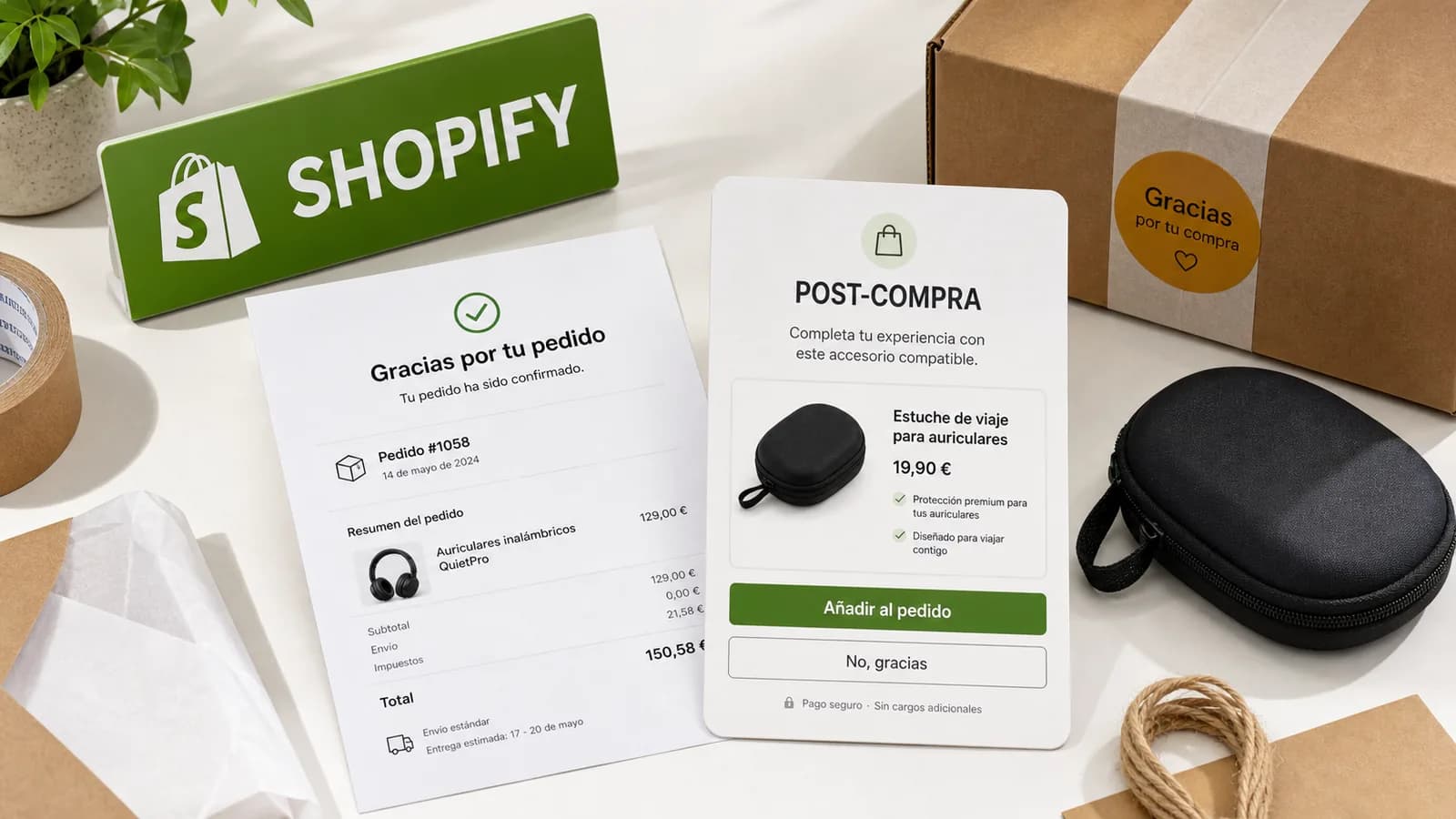
The advice: do not sell another product until the first order is clearly confirmed
CRO
The customer has just paid. That moment is commercially valuable, but also emotionally delicate. If the page immediately asks for more money before confirming what happened, the buyer may wonder whether the order is finished, whether shipping changed or whether the store is trying to trap them into a second purchase.
The first job of the post-payment surface is reassurance: order confirmed, amount charged, delivery expectations and next steps. Only after that is clear should the store present an add-on, and the offer must make sense beside the product just bought.
- Confirm the original order before showing the offer.
- Make price, shipping impact and cancellation rules visible.
- Keep the add-on closely related to the product bought.
- Avoid countdown pressure after payment.
- Review support tickets after the test.
Why now: Shopify is changing Thank you and Order status pages
Shopify merchants have had to review how customizations work around post-checkout surfaces. That makes the thank-you page and order status page a natural place to audit what appears after payment. The audit should not automatically become an upsell project; it should start with compatibility, trust and the customer's need for clarity.
Some stores will benefit from offers. Others may get more value from cleaner tracking, better order information, an NPS question, support links or delivery expectations. The point is to decide what the surface should do, not to fill every pixel with revenue pressure.
A post-purchase offer is not the same as the order status page
A post-purchase offer is a commercial module. The order status page is a reassurance and information surface. When those roles are blurred, customers can feel that the original purchase is incomplete. The UX should make it obvious that accepting the offer is optional and rejecting it will not harm the order.
This distinction is especially important on mobile, where space is tight and anxiety is easy to create. The accept and decline paths should both be visible and honest.
The winning offer is compatible, small and easy to justify
The best add-ons solve a nearby need: refills, spare parts, protection, care products, matching accessories, extra units or warranty-related services. They do not require the customer to reconsider the whole purchase. They explain why this specific product belongs with the order that was just placed.
Price matters. If the upsell is too expensive, the buyer needs a new decision process. If it is too random, it feels like an ad. A strong offer can be understood in seconds and accepted without changing trust in the original order.
A post-purchase discount is not a strategy if it destroys margin or trains waiting
Discounts can increase acceptance, but they also teach customers that better offers appear after payment. That can weaken future conversion or train shoppers to expect late-stage incentives. The discount only makes sense if margin survives after product cost, shipping, payment, returns and support.
The shop should compare discounted and non-discounted offers. Sometimes the right answer is a relevant accessory at a fair price, not another coupon.
UX: accepting and rejecting must be equally honest options
The decline button should not be hidden, guilt-driven or confusing. The customer has already bought; now the store is asking for permission to add something. If the interface makes no feel difficult, trust falls even when acceptance rises.
The copy should also explain whether the add-on changes billing, delivery date, shipment count or return conditions. Any surprise after acceptance becomes a support problem.
Measure the offer as an experiment, not as a magic revenue line
Post-purchase revenue can look attractive in a dashboard because it appears after the main conversion. But the real question is contribution. The test should compare a group with the offer to a control group without it, then measure acceptance, incremental AOV, margin, cancellations, refunds and support questions.
If customers contact support asking what happened to their order, the test is revealing a trust problem even if extra revenue appears positive.
A 14-day plan to launch a post-purchase upsell without improvising
In the first week, identify product pairs that are genuinely compatible, calculate margin after all costs, write clear offer copy and define whether shipping or billing changes. Prepare a control group and support answers before the test starts.
In the second week, launch to a limited audience, monitor acceptance and support, then review whether incremental contribution remains after returns and cancellations. Expand only when the experience stays clear.


Help people discover your shop
If you run an online shop, publish it on TienRank for free to strengthen your website authority and help Google and AI systems understand your brand better.


The TienRank reading: the best post-purchase upsell feels like service
A useful post-purchase offer helps the buyer complete the job they already started. It protects the order, improves use, simplifies care or saves a second purchase later. That is why it can increase revenue without feeling aggressive.
The weak version turns a thank-you page into a second checkout battle. The strong version keeps trust intact and adds value because the recommendation is obvious.
Further reading
Support useful news
Was this analysis useful?
Upvote it so it rises in News, reaches more e-commerce owners and helps us prioritize the cases that genuinely improve decision-making.
Frequently asked questions
What is a Shopify post-purchase upsell?
It is an offer shown after payment, usually around the thank-you or order status experience, designed to add a compatible product or service.
Is a post-purchase offer the same as the thank-you page?
Not exactly. The thank-you page confirms the purchase and can contain post-purchase content. The offer is a specific selling module.
What product should be offered after purchase?
A compatible add-on with enough margin, low logistical risk and a clear reason to be bought with the item just ordered.
Should every post-purchase upsell use a discount?
No. Discounts can help, but they can also train customers to wait or reduce margin. Test relevance before relying on coupons.
How do I measure whether the upsell works?
Compare orders with the offer against a control group, then review acceptance, incremental AOV, margin, returns, cancellations and support contacts.
Does the Shopify thank-you page migration force an upsell?
No. It forces a review of customizations and compatibility. Sometimes clearer order information is more valuable than another offer.
Sources
Community
Ask a question, add nuance or share how you would apply it to your own shop.