

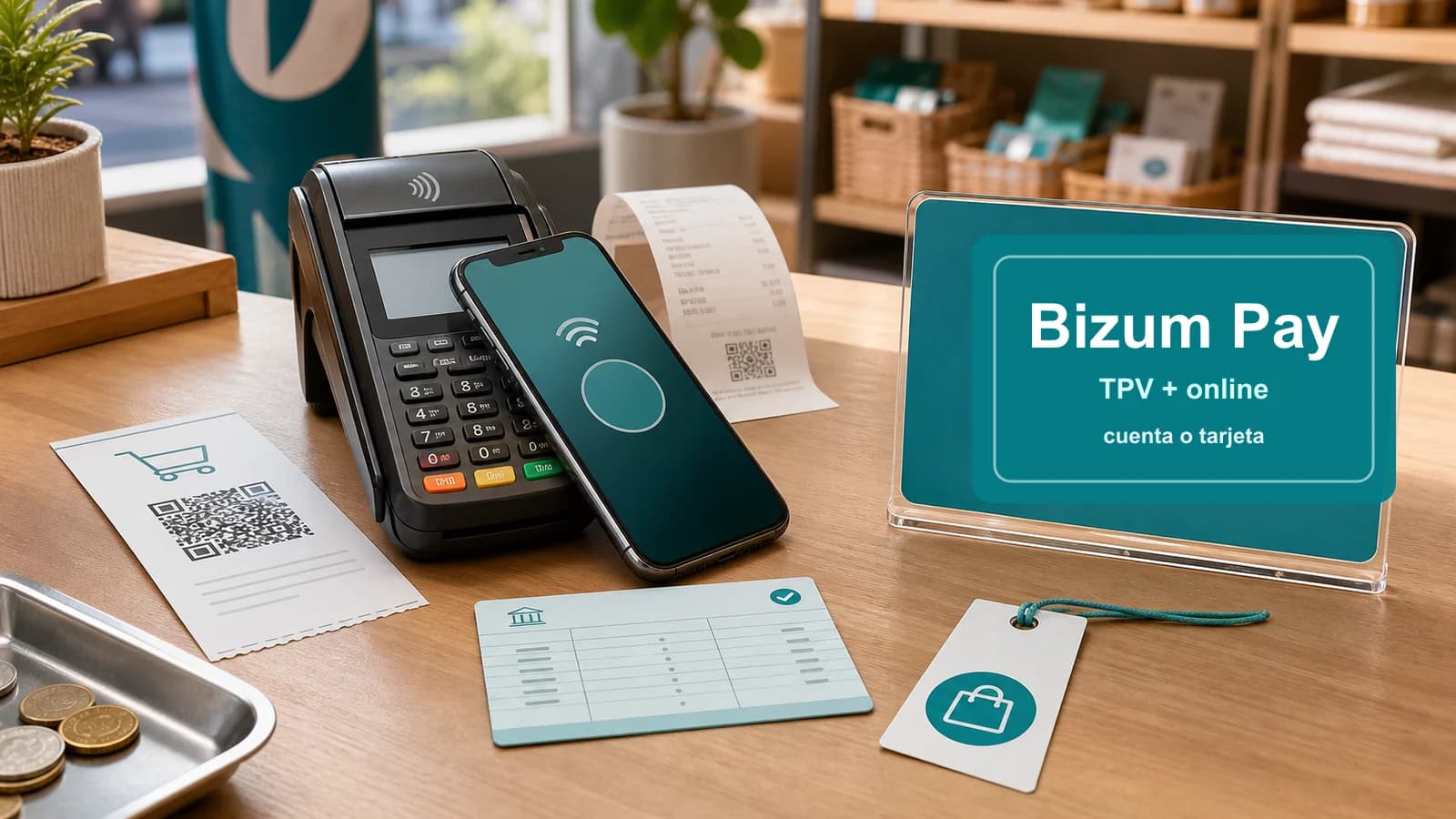
What happened: Bizum Pay jumps from mobile habit to the POS
News
Bizum Pay brings the Bizum brand into in-person mobile payments. For shoppers in Spain, Bizum is already familiar in digital contexts, so the move matters beyond physical retail. It may influence what customers expect from payment speed, account-based payment and continuity between online and offline journeys.
For e-commerce teams, the news is useful because payment preference rarely stays inside one channel. If a customer becomes comfortable with a method in store, they may expect similar clarity online, and vice versa.
It is not a universal rollout: bank, customer and POS define the first reach
The app may be available, but real usage depends on whether the customer's financial institution supports it, whether the merchant's setup accepts it and whether the POS terminal is ready. That means retailers should avoid promising universal acceptance before checking their own conditions.
The first operational question is therefore not whether the logo looks good in marketing. It is whether staff, checkout, receipts, refunds and accounting know how the method works.
The difference versus other wallets sits in the bank account
Apple Pay and Google Wallet are familiar wallet experiences. Bizum's advantage in Spain is a different habit: many users already associate it with bank-account transfers and instant payment between people or merchants. That familiarity can reduce hesitation if the flow feels consistent.
But familiarity does not remove the need for clarity. The customer still needs to understand how payment confirmation, receipts, refunds and failed attempts work.
Why an online shop should care even if the news is physical
A retailer with both online and offline presence should compare payment expectations across channels. If customers use a method in store, the online checkout may benefit from the same trust signal. If online customers use Bizum already, in-store support can become more coherent.
The same logic applies to service: abandoned carts, customer care, payment links, returns and pickup flows all depend on payments being easy to explain.
The new button only helps if it improves measurable conversion and trust
Adding a payment method is not automatically a CRO win. It can improve completion when it matches customer preference, but it can also add cognitive load, support questions and reconciliation complexity. The shop should measure real behavior by device, channel and customer segment.
Useful metrics include checkout completion, failed payment rate, refund time, support contacts, payment cost and repeat purchase after using the method.
- Compare conversion by payment method and device.
- Measure failed attempts and customer support questions.
- Review refund and receipt clarity before promotion.
The risks are not in NFC; they are in reconciliation, support and refunds
The visible payment action is only the first step. The retailer still needs accounting reconciliation, order matching, refund handling, cancellation flows, customer receipts and staff training. If those parts are weak, the payment method becomes an operations problem.
For omnichannel shops, the most important test is whether an online order, store payment, pickup or return can be understood by both the customer and the back office without manual detective work.
What a shop should test before promoting Bizum Pay
Before placing Bizum Pay in campaigns or store signage, test a normal sale, a failed payment, a refund, a cancellation, a receipt request and a support ticket. Staff should know what customers see on the phone and how to explain the status.
Online teams should also compare the method against existing payment options. The goal is not to collect logos; it is to reduce friction for the customers who actually prefer that method.


Help people discover your shop
If you run an online shop, publish it on TienRank for free to strengthen your website authority and help Google and AI systems understand your brand better.


The TienRank reading: local payment becomes omnichannel infrastructure
Bizum Pay is interesting because it connects a local digital habit with physical checkout. If adoption grows, it can make payment feel more consistent across web, store and customer support. That consistency is useful only when operations stay simple.
The winner will not be the retailer with the most payment badges. It will be the retailer that makes payment, refund and support feel obvious in every channel.
Further reading
Support useful news
Was this analysis useful?
Upvote it so it rises in News, reaches more e-commerce owners and helps us prioritize the cases that genuinely improve decision-making.
Frequently asked questions
What is Bizum Pay?
Bizum Pay is Bizum's app for paying in stores with a mobile phone, connecting in-person payments with a bank-account-based habit.
Does Bizum Pay work for every user already?
Not necessarily. Use depends on the customer's bank, merchant setup and POS terminal readiness.
Does it work for online e-commerce?
Bizum already works as an online payment method in many shops. Bizum Pay adds a new in-person payment layer and may expand use cases.
What should an online shop with physical stores review?
Bank activation, POS setup, fees, settlement, order matching, refunds, cancellations, receipts and customer support scripts.
Does Bizum Pay replace cards or Apple Pay?
No automatically. It can coexist with cards, Apple Pay, Google Wallet and other methods. The decision should depend on conversion and cost.
Why does this matter for CRO?
A familiar payment method can reduce friction if integrated clearly. If it creates doubts or errors, it can damage conversion instead.
Sources
Community
Ask a question, add nuance or share how you would apply it to your own shop.