

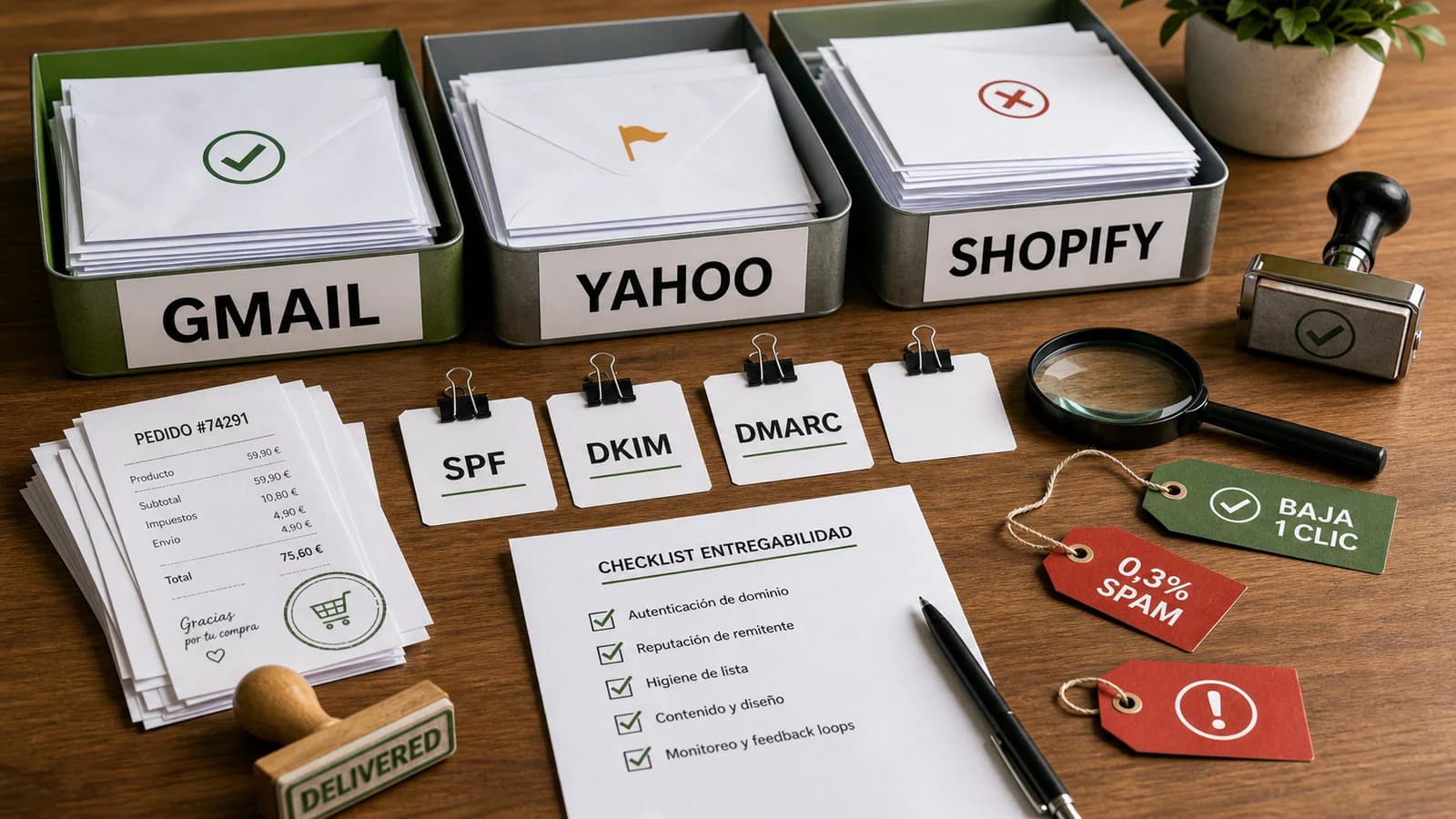
The advice: before sending more, become a sender people want to receive
Guide
Email marketing can look deceptively simple: add a popup, collect emails, send more campaigns and wait for revenue. The hard part is that the inbox is not a neutral pipe. Mailbox providers, spam buttons and silent subscribers constantly decide whether a shop deserves attention. If that trust is weak, extra sending volume makes the problem more visible instead of more profitable.
A useful deliverability plan starts before the next newsletter. The shop needs a domain that authenticates correctly, a list that remembers why it subscribed, a clear way to leave, and messages that match the customer's stage. Growth is not just more contacts; it is a healthier relationship between sender, provider and buyer.
- Treat inbox placement as a revenue prerequisite, not as IT housekeeping.
- Do not increase volume until authentication, complaints and unsubscribe are visible.
- Separate customers who recently engaged from cold addresses that no longer react.
- Use flows to answer intent before sending broad promotional blasts.
- Review deliverability every week, especially before major campaigns.
Gmail and Yahoo already treat trust as a marketing requirement
Large mailbox providers increasingly ask senders to prove who they are and how users respond to them. SPF, DKIM and DMARC help connect the visible brand to the systems sending mail. Complaint rate, bounces and engagement show whether recipients actually want that mail. For an online shop, these are commercial signals: when they deteriorate, campaigns lose reach before the team sees it in revenue.
The practical implication is that marketing cannot wait for a crisis. A domain that has been sending badly for months is harder to repair during Black Friday, a launch or a stock clearance. The safest path is to measure reputation before volume spikes, keep complaints low and avoid using old lists as if time had not changed their intent.
Shopify: if the sender is not ready, the brand can disappear from the From line
Shopify and email service providers give merchants tools to send confirmations, marketing and automated flows, but the store still has to make the domain trustworthy. If the sender is not configured properly, customers may see generic sender information, warning labels or a message that looks less connected to the brand they just bought from.
This matters because order confirmations, shipping updates and password emails should keep a cleaner reputation than campaigns. A store that mixes every message under the same weak setup risks turning essential customer communication into collateral damage from aggressive marketing.
- Confirm which tools send on behalf of the domain.
- Keep transactional and marketing reputation as separate as the stack allows.
- Check the visible From name and reply path after changing email tools.
Permission and unsubscribe: the best deliverability starts before the first email
A vague opt-in may inflate the database, but it weakens the relationship. The visitor should understand what type of email they will receive, how often it arrives and why it is useful. If the first message feels unrelated to the promise, the subscriber may ignore it, unsubscribe or report it as spam.
A visible unsubscribe is not a threat to revenue. It gives people a clean exit and reduces the chance that they use the spam button to leave. For deliverability, a person who leaves through the right door is less damaging than a person trapped into complaining.
Flows before blasts: efficiency comes from context, not noise
Welcome, abandoned cart, browse, replenishment, post-purchase and winback flows tend to work because they respond to a recent signal. The customer has just subscribed, looked at a product, bought something or stopped engaging. The message can therefore answer a nearby question instead of forcing a generic promotion.
Campaign blasts still have a place, but they should not carry the whole revenue plan. If every sale depends on sending louder discounts to the full list, margin and reputation will suffer together. A healthier account uses flows for intent and campaigns for moments that genuinely deserve a wider announcement.
List hygiene: the address that does not react also votes
Inactive contacts are not neutral. They can lower engagement, raise complaint risk and hide the real performance of a campaign. Keeping them forever because they once cost money to acquire is an emotional accounting mistake. If a segment has not opened, clicked or bought for a long period, it needs a reactivation path or suppression.
Hygiene should be routine, not a panic action after deliverability falls. Remove hard bounces, watch soft bounces, suppress role accounts when they behave badly, and stop sending heavy campaigns to cold cohorts before a major season. The objective is not the largest possible list; it is the largest useful audience.
The dashboard marketing should check every week
The useful dashboard combines technical, behavioral and commercial metrics. SPF, DKIM and DMARC status say whether the sender can be trusted technically. Spam rate, bounces and unsubscribes show how recipients react. Opens and clicks are directional; revenue, margin and repeat purchase decide whether the program is healthy.
Teams should also inspect results by segment. New subscribers, recent customers, loyal buyers and long-inactive contacts do not have the same tolerance. A single global open rate hides where the account is strong and where it is burning reputation.
- Authentication: SPF, DKIM, DMARC and sender alignment.
- Reputation: spam rate, bounces, blocks and Postmaster Tools signals.
- Behavior: opens, clicks, unsubscribes and reactivation results.
- Commerce: revenue, contribution margin, repeat purchase and returns by campaign.
A 14-day plan to repair deliverability without stopping sales
The first week should focus on diagnosis and containment. Audit every tool that sends email, confirm authentication, split transactional from marketing messages, pause cold segments and identify campaigns with high complaints or low engagement. Then rewrite subscription copy and unsubscribe paths so consent is explicit.
The second week should rebuild sending discipline. Launch or clean essential flows, send to the most engaged segment first, watch complaint and bounce signals, then expand gradually. The point is not to freeze email; it is to stop treating every address as equally safe.


Help people discover your shop
If you run an online shop, publish it on TienRank for free to strengthen your website authority and help Google and AI systems understand your brand better.


The TienRank reading: the inbox is an earned channel
Email belongs to the shop only if customers and providers keep accepting the relationship. Buying traffic is not enough if the owned channel is being eroded by poor permission, weak setup and careless blasts. Deliverability is therefore a growth constraint, not an afterthought.
The best email programs behave like good retailers: they identify themselves clearly, remember context, let customers leave easily and send messages that make sense. Once that base works, scaling the newsletter becomes a commercial decision rather than a deliverability gamble.
Further reading
Support useful news
Was this analysis useful?
Upvote it so it rises in News, reaches more e-commerce owners and helps us prioritize the cases that genuinely improve decision-making.
Frequently asked questions
What is e-commerce email deliverability?
It is the real ability of a store's emails to reach the right inbox and create interaction without damaging sender reputation.
Are SPF, DKIM and DMARC necessary for a small shop?
Yes in practice. Some obligations depend on volume or provider, but configuring them early protects the domain before marketing grows.
What DMARC policy should a store start with?
If the team does not know every tool sending from the domain, start with monitoring such as p=none, review reports and tighten later.
Why can an easy unsubscribe improve sales?
Because it lowers the chance that someone reports spam to leave. Fewer complaints help protect reputation and reach for people who still want emails.
Are campaigns or flows better?
They are not substitutes. Flows are often more efficient because they respond to events such as welcome, cart, purchase or replenishment.
How do I know whether the problem is technical or list quality?
Start with authentication, reputation, bounces and spam rate. If those are clean, segment engagement and inspect old cohorts separately.
Sources
Community

Ask a question, add nuance or share how you would apply it to your own shop.