

What happened with Amazon Spain
News
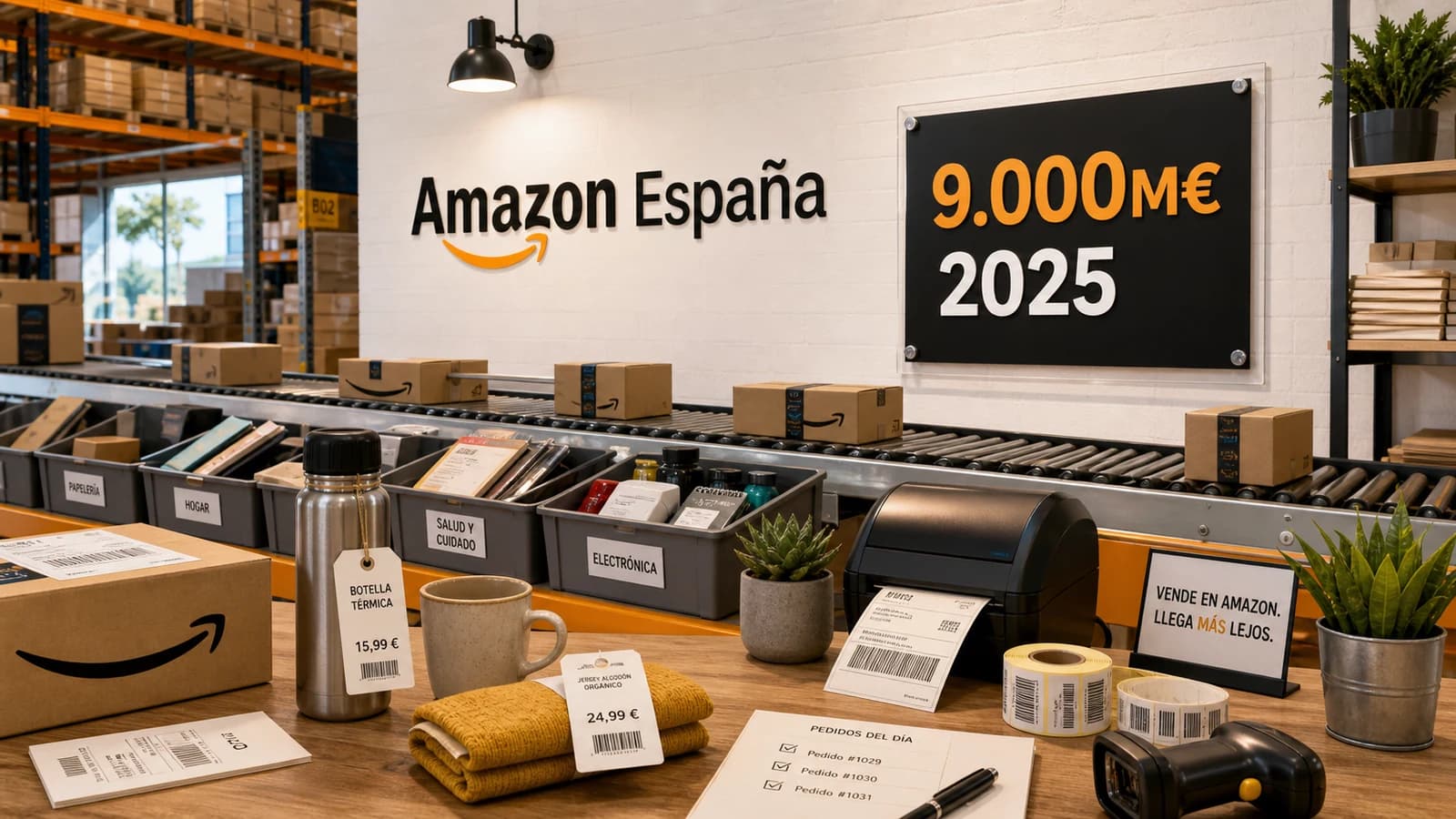
Amazon communicated that its gross revenue in Spain exceeded EUR 9 billion in 2025. The figure should not be read as a simple equivalent of retail sales from one store; Amazon's activity includes several business lines. Even so, the number is a clear signal of market scale and customer expectation.
For sellers and independent shops, the question is not whether Amazon is large. The question is what that scale does to pricing, delivery expectations, advertising cost, reviews, search behavior and the perceived standard of service.
The advantage is no longer only catalog: it is logistics, ads, data and cloud
Amazon competes through assortment, but also through fulfillment, advertising surfaces, customer data, reviews, payment trust and infrastructure. A small shop cannot copy all of that, and trying to match every condition may destroy margin.
The strategic response is to choose where the owned store can be better: specialization, product explanation, customer relationship, advice, brand story, niche assortment or post-sale service.
More than 60 percent of items sold already come from external sellers
Amazon's marketplace is not only Amazon retail. A large share of units sold comes from third-party sellers, which means many brands are competing inside a system where visibility, fulfillment, reviews and ads are all part of the operating model.
That creates opportunity and risk. The seller can access demand, but the rules of discovery, promotion and customer relationship are not fully owned.
Real margin is decided before activating FBA or Amazon Ads
A seller should calculate price net of product cost, referral fee, fulfillment, storage, advertising, promotions, returns, support and financing. Revenue alone can hide weak contribution if ads or logistics consume the margin.
FBA and Amazon Ads can be valuable, but they should be chosen SKU by SKU. Some products can absorb fees and competition; others cannot.
- Calculate contribution margin by SKU before scaling.
- Separate organic marketplace demand from paid visibility.
- Review return reasons and support workload by product.
- Set limits for ACOS, stock coverage and promotion depth.
The owned store should not copy Amazon; it should choose where to be better
Trying to equal Amazon on every dimension is often impossible for a specialist shop. The owned store should instead make the buying decision clearer: richer product information, better category guidance, human support, more precise fit advice, stronger bundles or more transparent brand context.
Marketplace search data, reviews and questions can still improve the owned store. They reveal objections, keywords and comparison points that product pages should answer directly.
The hidden risk is depending on a channel that also sets the rules
A marketplace can change fees, visibility rules, ad pressure, fulfillment requirements or account status. If the seller's customer relationship exists only there, the business is exposed. The owned channel is not a vanity project; it is strategic insurance.
That does not mean abandoning Amazon. It means deciding what role Amazon plays and what data, margin and customer relationship should be protected elsewhere.
A 48-hour audit for sellers and shops affected by Amazon
Search your own products and main competitors on Amazon. Compare price, delivery promise, review count, questions, content, sponsored placements and seller mix. Then calculate whether your own offer can compete profitably or should differentiate more clearly.
Use the audit to improve product pages, FAQs, bundles, shipping promises and ads outside Amazon. The goal is to learn from marketplace demand without becoming dependent on it.


Help people discover your shop
If you run an online shop, publish it on TienRank for free to strengthen your website authority and help Google and AI systems understand your brand better.


The TienRank reading: Amazon is not a destination, it is a discipline test
Amazon's scale makes it tempting to treat the marketplace as the whole strategy. That is dangerous. It is a channel with demand, rules, fees and competition, not a substitute for knowing the customer or building a profitable brand.
The best sellers use Amazon with discipline and use what they learn to strengthen their owned store. The weakest ones confuse marketplace revenue with business health.
Further reading
Support useful news
Was this analysis useful?
Upvote it so it rises in News, reaches more e-commerce owners and helps us prioritize the cases that genuinely improve decision-making.
Frequently asked questions
Are Amazon Spain's EUR 9 billion only e-commerce sales?
Not necessarily. Amazon refers to gross revenue from its activities in Spain, which can include more than direct retail e-commerce.
Does this mean every shop should sell on Amazon?
No. It means Amazon is too large to ignore without analysis. The decision should depend on margin, product, operation and channel strategy.
How do I calculate whether Amazon leaves margin?
Start with net price minus product cost, referral fee, fulfillment or FBA, storage, ads, promotions, returns, support and financing.
Should an owned store match Amazon delivery?
Only if it can do so without breaking margin. Many specialist stores win by explaining timelines, stock, warranties and post-sale service better.
Is Amazon Ads mandatory to sell well?
Not always, but in competitive categories visibility often requires advertising. That is why ACOS, contribution and stock coverage must be controlled.
What should a small shop review this week?
Search its products and competitors on Amazon, compare price, delivery, reviews, ads, questions and content, then decide where the owned store can be stronger.
Sources
Community


Ask a question, add nuance or share how you would apply it to your own shop.