

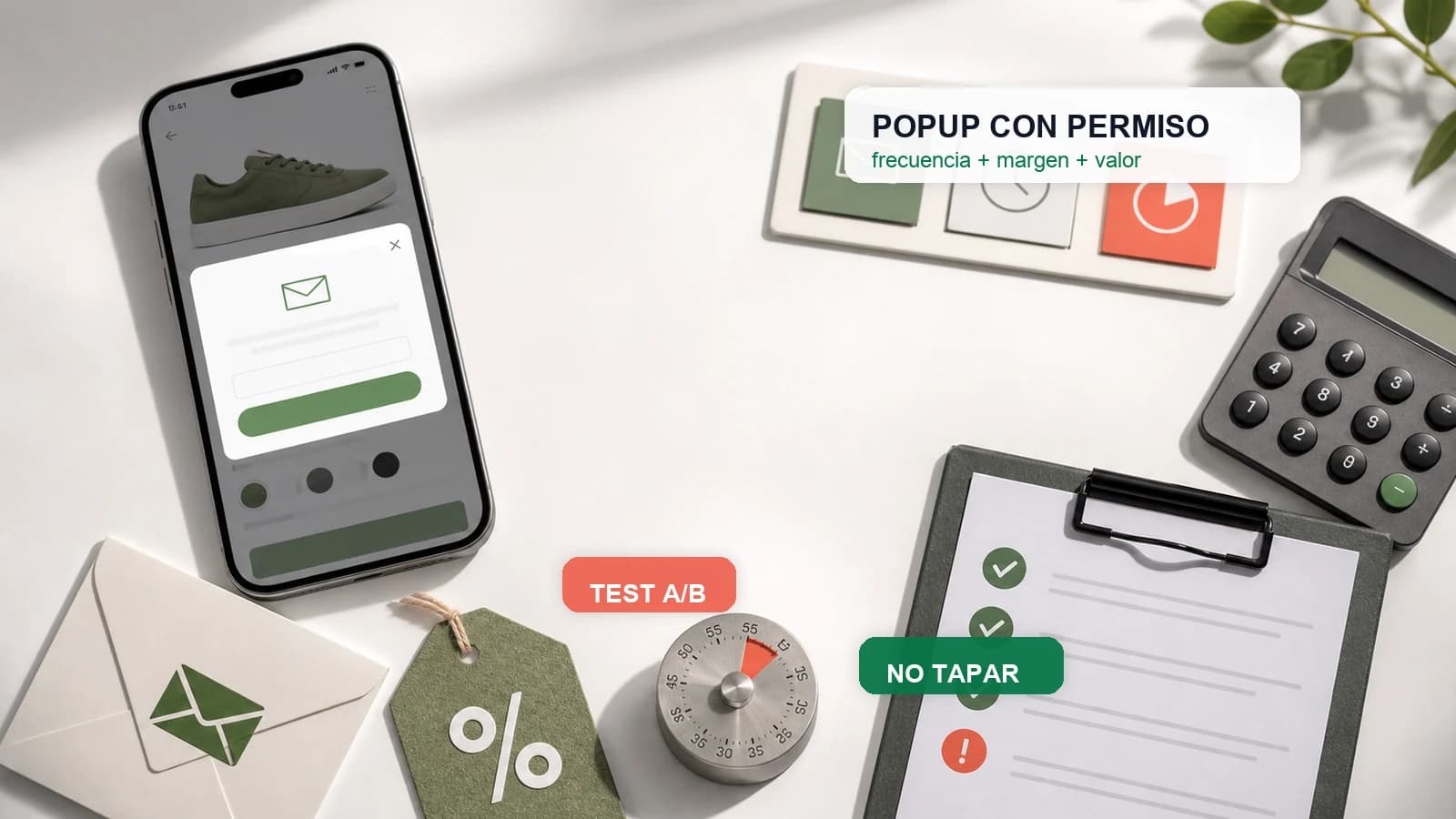
The advice: the popup should not be a toll before buying
Guide
A popup can grow an email list, but it can also interrupt the exact moment when the customer is trying to understand a product or complete a purchase. The right question is not whether popups work; it is what they cost in conversion, margin, accessibility and trust.
A useful popup appears when it has a reason to exist. It should offer something relevant, respect the user's task and disappear easily. A generic discount displayed immediately on every mobile visit is often a shortcut that hides weak segmentation.
- Do not show instant popups on critical mobile product or checkout steps.
- Give the close action enough visibility and keyboard access.
- Use incentives that margin can support.
- Connect the email capture to a useful first flow.
- Test against a no-popup control, not only against another popup.
Timing decides whether you capture permission or interrupt a task
A first-time visitor reading a guide, a returning product viewer and a cart user do not have the same intent. Showing the same popup at the same second ignores that difference. Better triggers include scroll depth, second page view, category interest, exit intent or a cart state where the offer is actually useful.
On mobile, timing is even more sensitive. If the popup covers product information, size selection, price, reviews or the checkout button, the list may grow while purchase intent falls.
The incentive must come from margin, not from a 10 percent template
Discount popups are common because they are easy to explain. But every coupon changes margin and trains behavior. If customers learn that the first visit always produces a discount, the shop may be teaching them not to buy at full price.
The incentive can be a discount, but it can also be early access, size guidance, replenishment reminders, product education, a category guide or a useful alert. The right choice depends on margin, category and customer intent.
Ask for less data, but make the data useful for the first email
Email is usually enough. If the popup asks for one more field, that field should change the first message: category, size, need, budget, pet type, skin concern or stock alert. Asking for data that does not personalize anything only adds friction.
The customer should see why the preference is requested. A field that clearly improves the next email feels helpful; a random form feels like a database exercise.
The popup is valuable because of the flow it activates
A captured email has little value if the follow-up is generic. The first message should fulfill the promise, then guide the customer through product education, objections, best sellers, stock alerts or replenishment depending on their intent.
The flow should also know when to stop. If the customer purchases, the popup capture should not trigger redundant pressure that conflicts with post-purchase communication.
A/B testing: compare against no popup, not just between popups
Many tests only compare two popup versions and declare a winner by opt-in rate. That misses the bigger question: what would have happened without a popup? The control group should measure conversion, average order value, margin, coupon use, unsubscribes, spam complaints and repeat purchase.
A popup with lower capture but better downstream purchase quality can be the stronger commercial choice.
A 10-day plan to fix popups without stopping campaigns
Start by mapping where the popup appears, which devices it affects, how often users see it and what discount it creates. Exclude checkout, delay the trigger, improve the close action and align the offer with the category or customer intent.
Then run a control, inspect conversion and margin, and rebuild the first email flow so the captured address receives value immediately.


Help people discover your shop
If you run an online shop, publish it on TienRank for free to strengthen your website authority and help Google and AI systems understand your brand better.


The TienRank reading: capturing emails does not justify breaking the store
A store does not win by forcing an email before the customer understands the product. It wins by earning permission at the right moment and then using that permission responsibly.
The best popup feels like a small helpful invitation. The worst one feels like a wall between the shopper and the thing they came to buy.
Further reading
Support useful news
Was this analysis useful?
Upvote it so it rises in News, reaches more e-commerce owners and helps us prioritize the cases that genuinely improve decision-making.
Frequently asked questions
Can an e-commerce popup hurt SEO?
Not simply by existing. The risk appears when an interstitial blocks content, interrupts access or makes it hard for users and search systems to reach the page.
When should a newsletter popup appear?
After the visitor has seen value: scroll, second page, category interest, exit intent or a cart state where the offer is relevant.
Is it better to offer a discount or content?
It depends on margin, category and intent. Discounts can work, but they can also train shoppers to wait for coupons.
What data should the popup ask for?
Email and, at most, one preference that changes the first message: category, size, need, budget or alert.
How do I measure whether the popup really works?
Compare against a no-popup control. Measure opt-in, conversion, margin after discount, coupon use, unsubscribes, spam, returns and repeat purchase.
What if I already have an aggressive popup active?
Do not remove it blindly. Create a control, limit frequency, exclude checkout, delay the trigger and test a less intrusive version.
Sources
Community
Ask a question, add nuance or share how you would apply it to your own shop.